Morning Stretches: Fitting a Simple Daily Habit Into Real Life
By:Author:High.diet Editorial
Updated on:October 20, 2026

- No, You Cannot Fix Years of Stiffness in a Week
- What's Actually Happening in Your Body Before Breakfast
- What Actually Decides Whether It Sticks
- A Simple Morning Routine You Can Copy Today
- Making Room for This Before the Day Gets Loud
- When a Stretching Habit Starts to Feel Automatic
- Mistakes That Quietly End a Morning Routine
- Building a Morning Stretch Habit Around High.diet
- Starting Tomorrow Morning Without Overcomplicating It
A few minutes of gentle movement after waking loosens stiff joints and gets blood moving before the day takes over. The mechanism is simple: muscles and connective tissue shorten overnight and respond well to slow, deliberate movement before you ask them to work hard.
This isn't about dramatic flexibility gains or fixing one stiff spot forever. It's a short routine, repeated often enough that your body starts to expect it.
This guide covers what a morning routine can realistically do, how to build one that fits a normal week, a sample session to copy, and the mistakes that usually end the habit early.
No, You Cannot Fix Years of Stiffness in a Week
A common hope is that a few sessions will undo years of a tight back or stiff hips. That's not how tissue adapts, and no routine - gentle or intense - changes that timeline.
Flexibility and ease of movement build gradually, through repeated, consistent exposure rather than one good session.
The honest version: a daily routine can make mornings feel less stiff and give you a steady marker of consistency, but it works slowly and in the background, not overnight.
What's Actually Happening in Your Body Before Breakfast
Why Mornings Feel Stiffer Than Afternoons
Hours of stillness during sleep mean less fluid movement around joints and less circulation through muscle tissue. Slow, controlled movement in the morning restores that circulation faster than just getting up and going.
Why Gentle Movement Works Better Than Forcing a Stretch
Cold tissue responds better to slow, sustained positions than to sudden or deep stretching. Easing into a position and holding it briefly lets the muscle lengthen without the fight-back response that comes from pushing too hard too fast.
What Actually Decides Whether It Sticks
Three things separate a routine that lasts from one that fades out by week two.
The Factors That Matter Most
- Consistency over intensity - five minutes done daily beats twenty minutes done twice a month.
- A fixed trigger - attaching the routine to something you already do, like brushing your teeth or boiling the kettle, removes the decision-making.
- Realistic length - a routine that fits into a packed morning gets finished; one that needs half an hour gets skipped.
A Simple Morning Routine You Can Copy Today
Here's a short sequence that covers the areas that tend to feel stiffest after sleep, without needing a mat or any equipment.
A Five-Minute Sequence
- Neck rolls - slow circles, one minute total, to release overnight tension in the neck and shoulders.
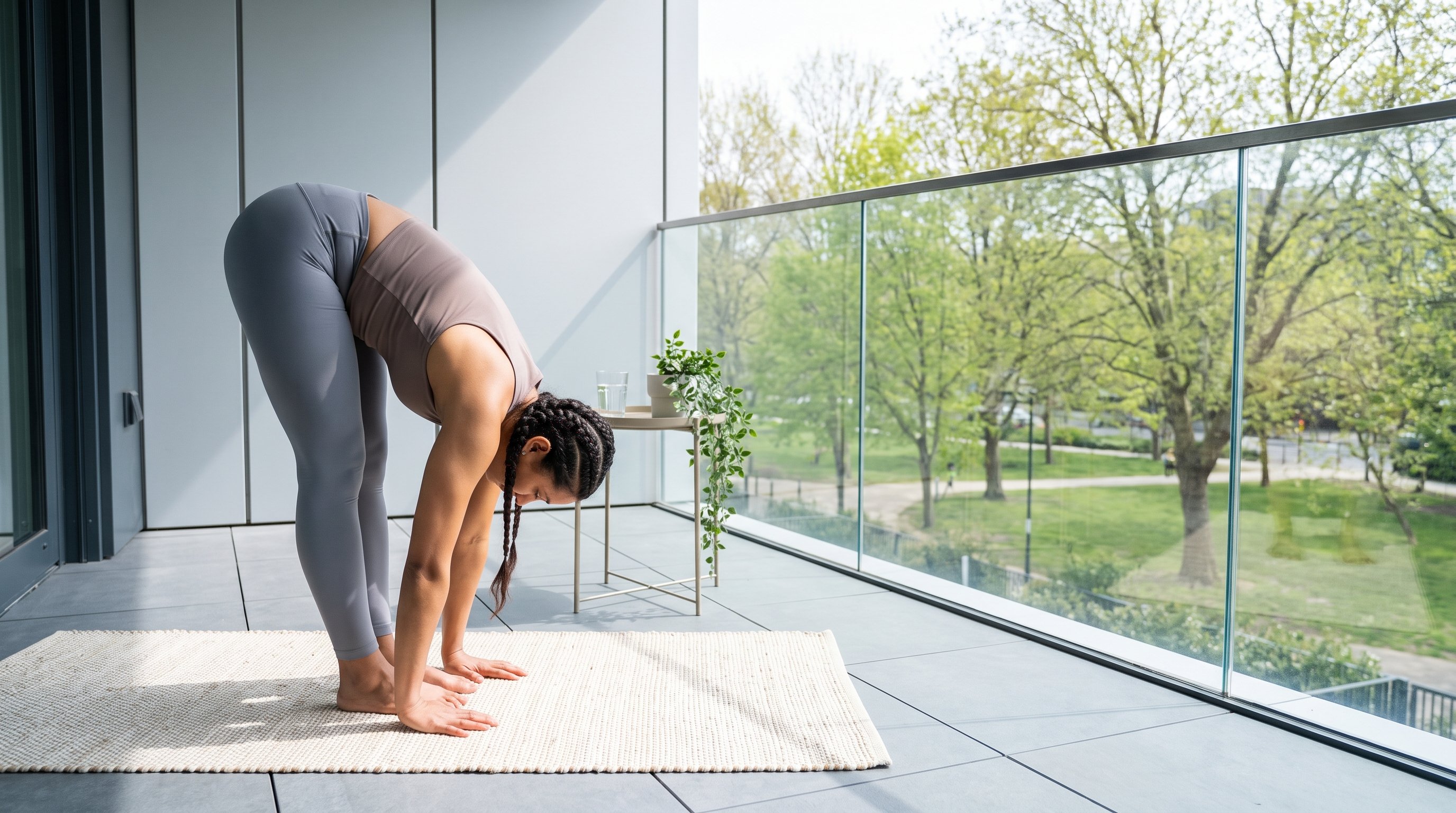
- Standing forward fold - let the arms hang and hold for thirty seconds to ease the lower back and hamstrings.
- Cat-cow on hands and knees - move slowly between the two positions for one minute to wake up the spine.
- Hip circles standing - thirty seconds each direction to loosen the hips before walking around.
- Overhead reach and side bend - thirty seconds each side to open up the ribs and shoulders.
Making Room for This Before the Day Gets Loud
The hardest part isn't the movement itself, it's finding five minutes before the inbox, the kids or the commute take over.
Doing it before checking a phone, or right after the kettle goes on, keeps it anchored to something that already happens every day.
If you're already using High.diet to keep steps, water and weight in one place, the same habit-building approach applies here: small, repeated actions logged daily tend to outlast big plans that only get followed once.
When a Stretching Habit Starts to Feel Automatic
The first week or two usually feels like a conscious effort, something you have to remember rather than something that just happens.
Past that early stretch, most people notice the routine starts attaching itself to the same cue each day, whether that's the kettle boiling or the alarm going off.
Stiffness easing off and mornings feeling less rushed tend to show up gradually rather than on a fixed date, so it helps to judge progress by whether you're still doing it, not by how flexible you've become.
Mistakes That Quietly End a Morning Routine
Making It Too Long to Finish
A twenty-minute routine sounds great on paper and gets skipped on a rushed Tuesday. Cut it down to something that fits even your worst mornings.
Stretching Cold Muscles Too Hard
Pushing into a deep stretch straight out of bed can feel uncomfortable rather than useful. Ease into each position slowly instead of forcing a deeper range on day one.
Skipping Weekends and Starting Over
A routine that only happens on weekdays keeps resetting to square one every Monday. Keeping it simple enough to do on weekends too is what makes it a habit rather than a weekday chore.
Expecting It to Replace Real Exercise
A few minutes of movement in the morning isn't a substitute for a proper workout later in the day. Treat it as a separate, smaller habit that complements training rather than one that replaces it.
Building a Morning Stretch Habit Around High.diet
A short stretching routine works best when it sits alongside other small daily habits instead of standing alone.
High.diet's light exercise sessions are built around the same idea as a morning stretch: low-impact, guided movement that fits into a normal day instead of demanding a big block of free time.
Pairing that with the app's progress tracker - steps, water, weight and fasting all in one place - gives you a way to see the small, repeated actions add up over weeks, not just the one you did this morning.

Build Your Protein Diet
Protein Focused Eating
Starting Tomorrow Morning Without Overcomplicating It
Pick one trigger, like the kettle or the alarm, and attach three or four simple movements to it before anything else happens.
That's the whole plan, and it works better than a longer routine you only manage once, especially if you're already tracking other small habits through High.diet.
FAQ
Stretching on its own burns very little energy and isn't a weight-loss tool by itself. It's better thought of as a habit that supports a consistent routine, alongside things like diet and regular exercise.
Stretching after exercise and a short morning routine serve different purposes, so there's no need to choose one over the other. One eases overnight stiffness before the day starts, the other helps you cool down after training.
A routine that takes two or three minutes still counts, and it's better than skipping it entirely because a longer version felt impossible. Attaching it to something unavoidable, like brushing your teeth, usually finds the time that felt missing.
High.diet's light exercise library includes short, guided sessions that work well as a morning routine or an add-on to one. Logging the habit in the app's tracker alongside steps and water can help it feel like part of a bigger routine rather than an isolated task.
Share this post