Low Impact Workout: The Complete Guide
By:Author:High.diet Editorial
Updated on:October 20, 2026
- Building Your First Low Impact Routine From Scratch
- How Often a Low Impact Workout Actually Needs to Happen
- Making Low Impact Training Work Around a Full Week
- A Four-Week Low Impact Starting Plan
- What Happens in the Weeks Most People Give Up
- Mistakes That Quietly Undermine a Low Impact Routine
- Pairing a Low Impact Workout With High.diet's Daily Tools
- Starting Your First Low Impact Session This Week
A low impact workout is any session that keeps at least one foot on the ground at all times, or avoids jarring landings altogether - think step-ups, modified squats, rowing, or bodyweight strength moves done slowly.
It works because muscle doesn't know the difference between a jump and a controlled step. Tension, range of motion, and how often you show up matter more than how hard you land.
This guide covers how to structure a low impact routine, how often to train, a four-week starting point, and the mistakes that cause most people to quit before week three.
Building Your First Low Impact Routine From Scratch
You don't need equipment or a gym floor to start. You need a plan that uses the joints you already trust and builds from there.
Steps to Build Your Routine
- Pick a base of four moves - a squat variation, a push, a pull or row, and a core hold cover most of what you need.
- Set a session length you'll actually keep - 20 to 30 minutes is enough to work every major muscle group without burning out your schedule.
- Slow the tempo down - a four-second lowering phase on any move raises the effort without adding impact.
- Add a short warm-up - five minutes of marching on the spot or arm circles gets joints moving before load goes on them.
- Track reps, not speed - low impact training rewards control, so count sets completed cleanly rather than how fast you finish.
- Rest one day between sessions at first - recovery is what lets the next session feel lighter, not heavier.
- Reassess every two weeks - add a round, a few reps, or a longer hold once the current version feels easy.
How Often a Low Impact Workout Actually Needs to Happen
Matching Frequency to Recovery
Three to four sessions a week is enough for most people to see steady change, because low impact training is gentler on joints and recovers faster than high-impact training.
Below is a simple way to match frequency to your current starting point.
| Starting Point | Weekly Frequency | Session Length |
|---|---|---|
| New to exercise | 2-3 sessions weekly | 15-20 minutes |
| Returning after a break | 3 sessions weekly | 20-25 minutes |
| Comfortable with routine | 4 sessions weekly | 25-35 minutes |
| Combining with daily walking | 3 sessions weekly | 20-30 minutes |
Making Low Impact Training Work Around a Full Week
The biggest obstacle isn't the workout itself, it's finding a slot where it doesn't compete with everything else on the calendar.
Short sessions stacked onto something you already do - after coffee, before a shower, during a lunch break - tend to survive longer than sessions that need a dedicated hour.
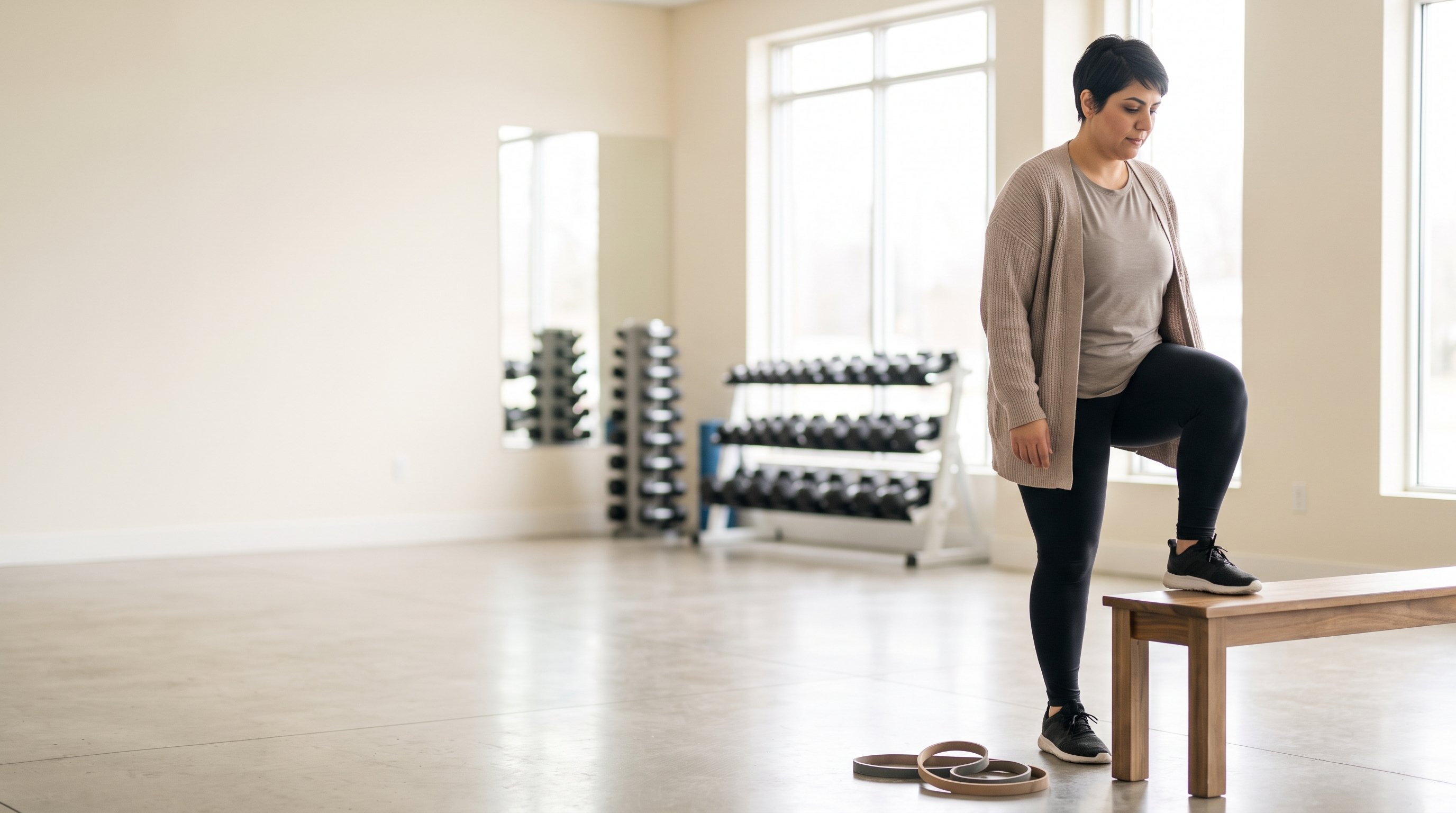
Keeping the moves the same for a few weeks also removes decision fatigue, which is often what causes a routine to quietly disappear.
Light exercise sessions are built around this same idea - short, guided, low impact movements you can slot into a normal day without needing a gym bag.
A Four-Week Low Impact Starting Plan
This isn't about hitting numbers perfectly. It's about getting the order right so your body adapts before the load increases.
| Stage | Focus | Volume |
|---|---|---|
| Week 1 | Learn the four base moves | 2 rounds, 8-10 reps each |
| Week 2 | Add a third round | 3 rounds, 8-10 reps each |
| Week 3 | Slow the tempo down | 3 rounds, 10-12 reps each |
| Week 4 | Add one new variation | 3-4 rounds, 10-12 reps each |
What Happens in the Weeks Most People Give Up
The first week or two often feels easy, almost too easy, and that's by design - low impact doesn't mean exhausting.
Around the point where the novelty wears off is where most people drop sessions, not because the training stopped working but because nothing felt dramatic enough to chase.
Staying vague about a finish line helps here - the goal isn't a date, it's keeping the habit intact long enough for the small weekly progressions to add up.
Mistakes That Quietly Undermine a Low Impact Routine
Treating Low Impact As Low Effort
Slow and controlled still needs real tension in the muscle, so if a set feels too easy, add reps or slow the tempo rather than assuming low impact means light work.
Skipping the Warm-Up Because the Workout Feels Gentle
Joints still need a few minutes of movement before load, even if the session itself won't involve jumping or pounding.

Changing the Whole Routine Every Week
Switching moves constantly stops you from getting stronger at any of them, so repeat the same base for at least two to three weeks before swapping anything.
Expecting One Body Part to Change on Its Own
No workout, low impact or otherwise, can target fat loss to one area - the body decides where change shows up, not the exercise selection.
Ignoring Recovery Days Entirely
Training every single day without a break slows the adaptation that actually makes sessions feel easier over time.
Pairing a Low Impact Workout With High.diet's Daily Tools
A workout only does part of the job - what's on the plate and whether you're actually keeping track of progress does the rest.
High.diet pairs its light exercise sessions with a tailored high-protein meal plan, so the training and the eating side are working toward the same outcome instead of fighting each other.
Step counters, water intake, and weight tracking sit in the same place, which makes it easier to notice whether the routine is actually moving in the right direction week to week.
Build Your Protein Diet
Protein Focused Eating
Starting Your First Low Impact Session This Week
Pick one day this week, set a 20-minute block, and run through four simple moves at a pace your joints are happy with.
That's the whole starting point - no equipment required, no perfect conditions needed, just a repeatable session you can build on.
High.diet can hold the rest of the structure around it, from the guided sessions to the meal plan and the daily tracking, so the routine has something to lean on past the first week.
FAQ
Yes, strength comes from tension and consistent load on a muscle, not from how hard you land. Slow, controlled low impact moves can build real strength over time when the reps or tempo increase gradually.
No, low impact simply removes jarring or jumping movements, it doesn't remove effort. A well-structured session can still raise your heart rate and fatigue your muscles without a single jump.
Reduce the range of motion or swap the move for a gentler variation rather than pushing through discomfort. If pain persists beyond normal muscle fatigue, it's worth scaling the session back further.
High.diet offers guided low impact exercise sessions alongside a tailored meal plan and daily trackers, so the training and nutrition side support each other. It's built to make consistency easier rather than adding another thing to figure out alone.
Share this post