Back Workout at Home Without Equipment: How to Fit It Into a Real Week
By:Author:High.diet Editorial
Updated on:October 17, 2026
- Can You Actually Train Back Without a Pull-Up Bar?
- How a No-Equipment Back Session Actually Works
- How Many Back Sessions Fit Into a Normal Week
- Why Doorframe Rows Beat a Gym Membership You Dread
- Making a Back Routine Fit a Week That's Already Full
- No, You Can't Spot-Reduce Fat Off Your Back
- What Actually Changes Your Back Training Results
- Mistakes That Quietly Stall a Home Back Routine
- Pairing a High.diet Back Routine With Daily Habits
- Starting Your First No-Equipment Back Session Today
Yes, you can build a stronger back at home without equipment - the muscles that matter most respond to bodyweight angles like supermans, reverse snow angels and doorframe rows just as well as they respond to a cable machine.
Your back muscles don't know whether resistance comes from a loaded bar or your own bodyweight pulling against gravity at an angle. They just respond to tension, time under that tension, and how often you show up.
This article covers what a no-equipment back routine actually does, how often to train it, where people quietly stall, and how to keep the habit going past the first couple of weeks.
Can You Actually Train Back Without a Pull-Up Bar?
The back is a big group of muscles - lats, rhomboids, traps, rear delts, spinal erectors - and most of them respond to pulling or extending against resistance, not just to a bar overhead.
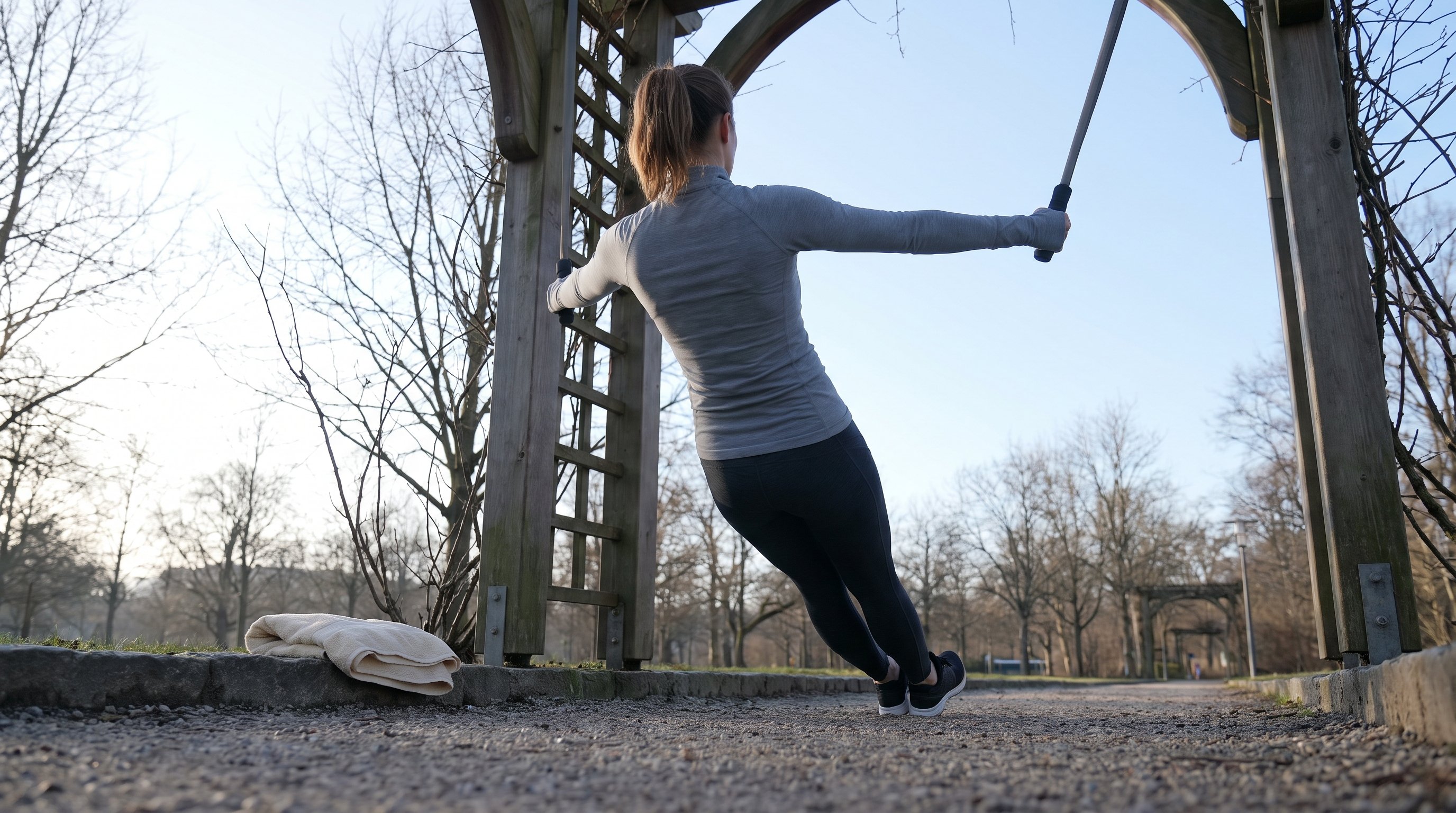
A doorframe row uses your bodyweight leaning back as the resistance. A superman uses gravity pulling your chest and legs down while your lower back and glutes fight to lift them.
Here's the honest arithmetic: if you weigh 70kg and lean back at a 45-degree angle for a doorframe row, a meaningful share of that bodyweight is now the load your back muscles pull against. That's not nothing - it's a real training stimulus, repeated often enough to matter.
None of this means a pull-up bar is useless. It just means the absence of one isn't the thing stopping you from training back properly.
How a No-Equipment Back Session Actually Works
Pulling Movements Recruit the Lats and Mid-Back
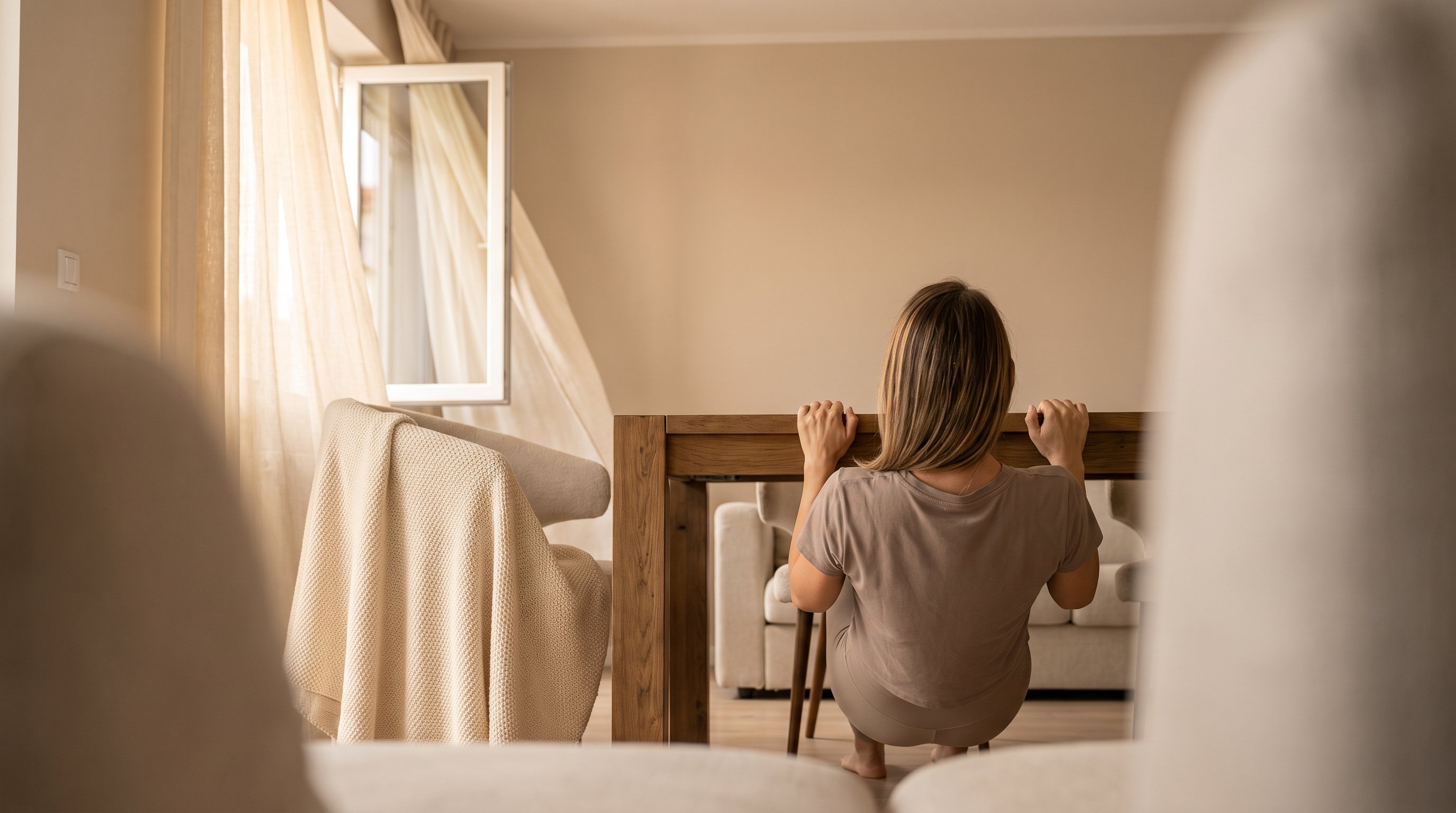
Doorframe rows, towel rows looped around a sturdy post, and inverted rows under a stable table all put your lats and rhomboids under tension as you pull your chest toward a fixed point. The angle you choose - more upright or more horizontal - changes how much of your bodyweight the muscles have to move.
Extension Movements Build the Lower Back and Spinal Stability
Supermans and reverse snow angels work the opposite direction: instead of pulling something toward you, you lift your own torso and limbs against gravity while lying face down. This trains the spinal erectors and glutes, the muscles that keep your back stable when you sit, stand, or carry things through the day.
How Many Back Sessions Fit Into a Normal Week
Two to Three Sessions a Week Is Enough to Start
Back muscles need recovery time between sessions, so two or three sessions spaced across the week gives you repeated exposure without piling fatigue on the same tissue every day.
| Day | Focus |
|---|---|
| Monday | Rows and lat work |
| Tuesday | Rest or walking |
| Wednesday | Extension work |
| Thursday | Rest or light stretching |
| Friday | Full back session |
That's three working sessions spread across a five-day window, which leaves weekends open for whatever else the week throws at you.
Why Doorframe Rows Beat a Gym Membership You Dread
A gym back session usually means a commute, a wait for the lat pulldown machine, and a bag to pack the night before - three separate chances to skip the whole thing.
A doorframe row needs a doorframe. There's no travel time, no equipment to find, and no reason to put it off until tomorrow.
The harder version isn't the gym machine - it's the version of the routine that depends on leaving the house. The easier version is the one you can do in the ten minutes before dinner, which is exactly why it tends to actually happen.
Making a Back Routine Fit a Week That's Already Full
Most weeks don't have a clean gap for exercise - they have gaps between other things, and a no-equipment back routine is short enough to live in those gaps.
Ten minutes before a shower, during a work call with the camera off, or right after you close the laptop are all realistic windows for a few sets of rows and supermans.
This is where High.diet's light exercise sessions come in useful - they're built to be guided and low-impact, so you're not improvising a routine from scratch every time you have a spare ten minutes.
Pairing that with the app's progress tracker means you can see water, steps and weight in one place, so the back routine doesn't feel like one more unconnected task on top of everything else.
No, You Can't Spot-Reduce Fat Off Your Back
A common hope is that back exercises will melt fat specifically off the back or shrink bra-line bulge directly - that's not how bodies work.
Where fat shows up and where it leaves from is decided by genetics and overall body composition, not by which muscle group you just trained.
What back training actually does is build the muscle underneath - stronger lats, traps and spinal erectors - and build muscle wherever your body decides to lose fat from, over time and alongside a sensible eating pattern.
That's a less exciting promise than spot reduction, but it's the one that's actually true.
What Actually Changes Your Back Training Results
Three things decide whether a no-equipment back routine moves the needle, and they matter in roughly this order.
What Moves the Needle
- Consistency across weeks - two sessions every week for a month beats five sessions in one enthusiastic week followed by nothing.
- Angle and range of motion - leaning further back on a row or lifting higher on a superman increases the demand on the same muscles without needing any added weight.
- Controlled tempo - slowing the pulling or lifting phase down keeps the muscle under tension longer, which matters more than rushing through extra reps.
Mistakes That Quietly Stall a Home Back Routine
Skipping Rows Because They Feel Too Easy at First
A doorframe row can feel light in the first week, so people drop it for something that burns more - but the fix is to lean back further or slow the tempo, not abandon the movement.
Training Back Every Day With No Recovery Gaps
More isn't automatically better here; back muscles need the rest days between sessions to actually adapt, so daily training without gaps can stall progress rather than speed it up.

Rushing Through Supermans Without Holding the Top
Speeding through extension exercises cuts the time the lower back spends under tension - a short pause at the top of each rep does more for the muscle than extra fast reps.
Ignoring the Rest of the Week Around the Workout
A ten-minute back session doesn't undo a week of sitting all day and eating however it happens; pairing training with steadier habits around food and movement is what makes the routine worth keeping.
Pairing a High.diet Back Routine With Daily Habits
A back routine works best when it isn't the only habit you're trying to hold onto in a busy week.
High.diet brings light, guided exercise sessions, a high-protein meal plan built around food you already like, and trackers for steps, water and weight into one place, so the back routine sits alongside everything else instead of competing with it.
The app also includes lifestyle challenges and nutrition guides, which give you something structured to lean on in the weeks when motivation alone isn't enough.
Build Your Protein Diet
Protein Focused Eating
Starting Your First No-Equipment Back Session Today
The simplest place to start is a doorframe row and a set of supermans, done today, without waiting for the perfect week to begin.
Add a second session later in the week, track it somewhere you'll actually see it, and let the routine build from there - High.diet's trackers and light exercise sessions are there if you want that part handled for you.
FAQ
Yes - bodyweight angles like doorframe rows and supermans create real resistance for the lats, mid-back and spinal erectors. The muscle responds to the tension and consistency, not to whether the resistance came from a machine.
It's useful but not necessary - rows against a doorframe or a sturdy table edge target the same pulling muscles from a different angle. A bar adds options later, it doesn't gate getting started now.
Supermans and reverse snow angels need nothing but floor space, so they're a solid starting point even without a doorframe or table to row against. Once rows are possible, add them back in for the pulling side of the routine.
Usually because it depended on finding equipment or a big block of free time that didn't show up again. Keeping sessions short and tracking them inside High.diet alongside water, steps and weight tends to keep the habit visible instead of forgotten.
Share this post