Bodyweight Exercises: A Practical Guide to Train Without a Gym
By:Author:High.diet Editorial
Updated on:October 20, 2026
- A Week of Resistance Training You Can Copy
- How Many Movements Count As Enough
- Why No-Equipment Training Beats the Gym Membership Nobody Visits
- Fitting Training Into a Week That's Already Full
- Adapting Your Routine to Where You're Starting From
- Where Most People Quit and How to Stay Past It
- Pairing Your Routine With High.diet's Daily Tools
- Making Your Training a Habit, Not a Phase
Bodyweight exercises work because your own mass is enough resistance to build strength, and because you can start the first set in the time it takes to find your shoes for the gym.
The mechanism is simple: push-ups, squats, lunges and planks load your muscles against gravity, and your body adapts by getting stronger when that load repeats often enough.
This guide covers what a workable week looks like, how much training is actually enough, why the simpler approach tends to stick, and how to fit it around a real schedule.
A Week of Resistance Training You Can Copy
You don't need a different plan for every day. A repeating structure of push, pull, legs and core, spread across a normal week, covers the whole body without any guesswork.
A Sample Week
- Monday - push-ups, squats, plank, 20 minutes
- Tuesday - rest or a walk
- Wednesday - lunges, glute bridges, mountain climbers, 20 minutes
- Thursday - rest or a walk
- Friday - push-ups, squats, plank, 20 minutes
- Saturday - lunges, glute bridges, side plank, 20 minutes
- Sunday - rest
That's four sessions a week, each one repeating a small set of moves rather than chasing variety for its own sake.
How Many Movements Count As Enough
A Starting Range
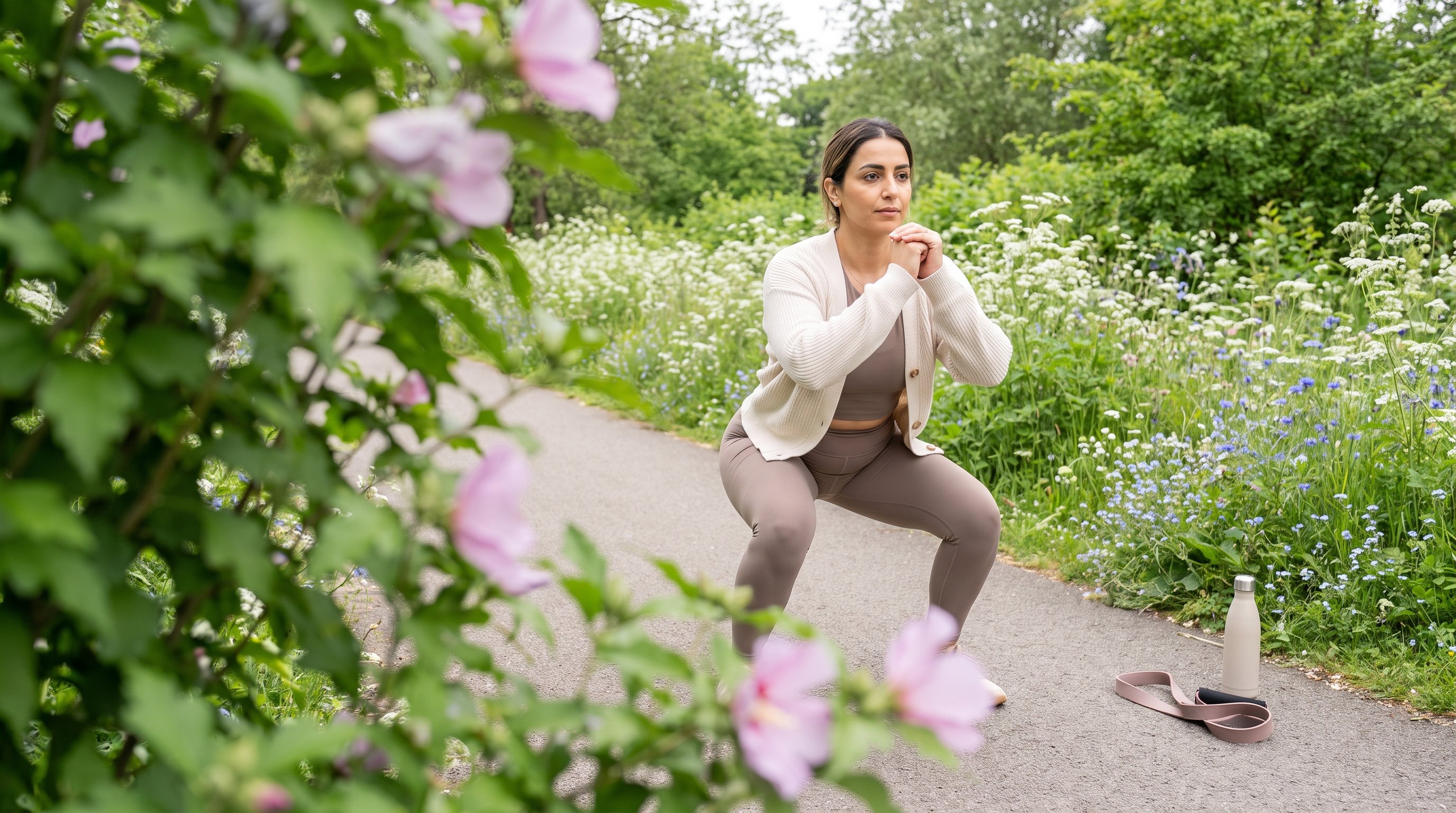
A session of 15-25 minutes, covering four or five exercises, is enough to count as a real workout without eating your whole evening.
| Exercise | Sets | Reps |
|---|---|---|
| Push-ups | 3 sets | 8-12 reps |
| Squats | 3 sets | 12-15 reps |
| Lunges | 2 sets | 10 per leg |
| Plank | 3 sets | 20-40 seconds |
| Glute bridges | 3 sets | 12-15 reps |
If 12 reps feels easy by the third set, that's the cue to add reps or slow the movement down rather than add more exercises.
Why No-Equipment Training Beats the Gym Membership Nobody Visits
A gym membership only works on the days you actually drive there, pack a bag and find parking.
Training without equipment removes every one of those steps - no commute, no equipment, no changing room, just floor space and a few minutes.
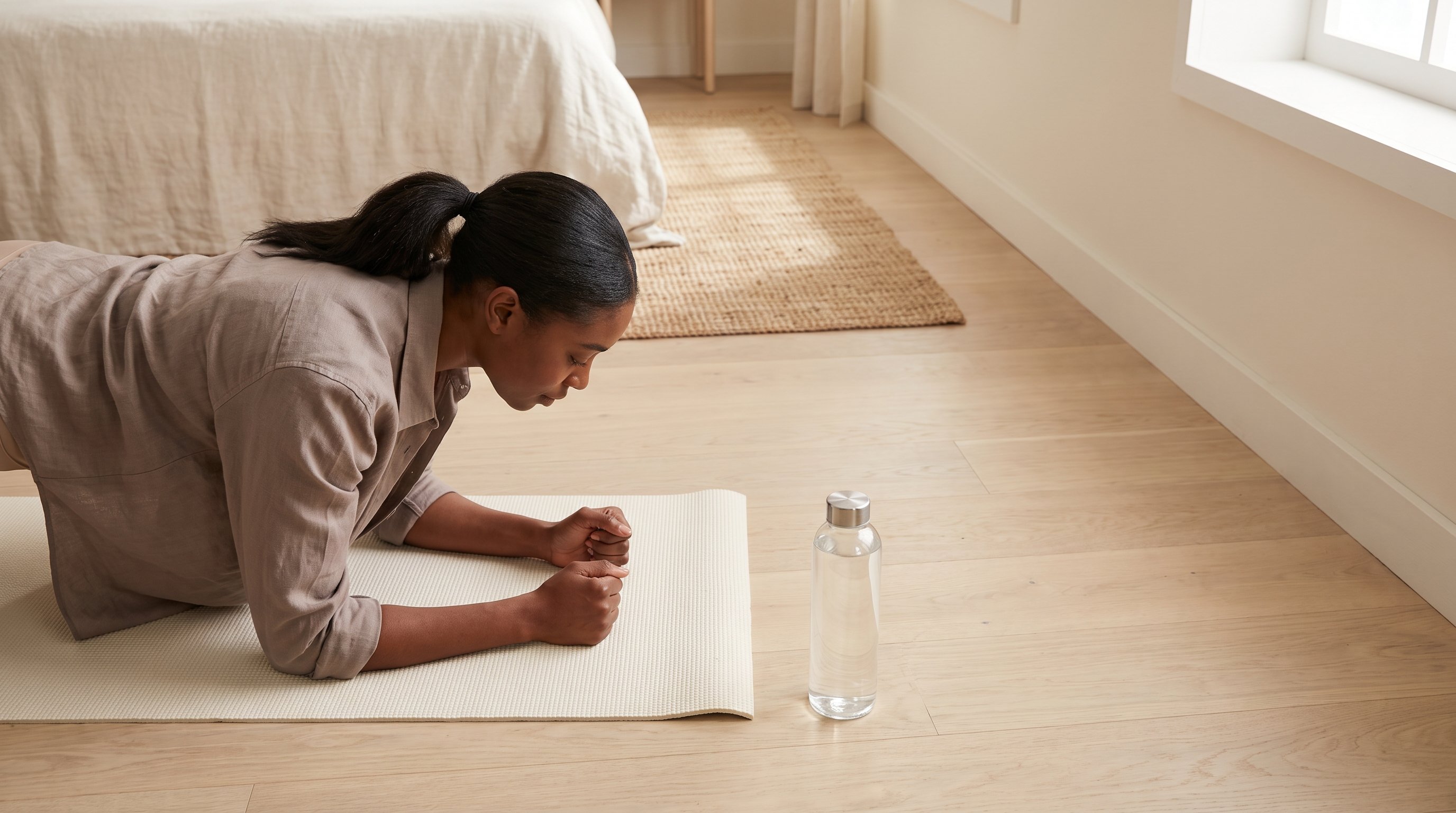
The harder plan rarely loses on paper - it's usually stronger in theory - but it loses in practice when it depends on conditions that don't show up every week.
The easier option wins because showing up four times is worth more than a perfect plan you attempt once.
Fitting Training Into a Week That's Already Full
Most weeks don't have a free hour waiting around - they have ten-minute gaps between meetings, school runs and dinner.
No-equipment routines fit those gaps because they don't need travel time or a booked slot, just a decision to start.
Pairing that short session with a meal plan built around food you already like takes the guesswork out of the other half of the equation - what you eat afterwards.
High.diet's light exercise sessions are built around the same idea: short, guided, low-impact routines that fit into a normal day instead of demanding a new one.
Adapting Your Routine to Where You're Starting From
Starting From Scratch
If push-ups on the floor feel like too much, do them against a wall or a kitchen counter and lower the angle over time.
Short on Time
Two ten-minute sessions a day cover the same total work as one twenty-minute block, so split it if that's what the day allows.
Training Around Joint Discomfort
Swap jumping moves for step-based versions and keep plank holds shorter but more frequent, since the goal is consistent movement, not strain.
Already Active
Slow the tempo, add single-leg versions of squats and lunges, or extend the hold time on planks to keep the same exercises challenging.
Where Most People Quit and How to Stay Past It
The drop-off point usually comes once the first burst of motivation fades, somewhere after the first couple of weeks, when the routine stops feeling new.
Strength changes show up slowly and unevenly - a rep that felt hard in week one starts to feel manageable before you've consciously noticed the difference.
Keep the plan boring on purpose: the same four exercises, the same four days, so the only decision left is whether you show up.
Pairing Your Routine With High.diet's Daily Tools
Training without equipment solves one half of the problem - the other half is keeping track of whether the week actually happened.
High.diet's progress tracker keeps steps, water intake, weight and your workout sessions in one place, so you can see the pattern across weeks instead of guessing from memory.
The app's light exercise library adds guided, low-impact sessions you can slot in alongside your own routine, and the lifestyle challenges give you a reason to keep the streak going past the point where motivation usually runs out.
Build Your Protein Diet
Protein Focused Eating
Making Your Training a Habit, Not a Phase
The next concrete step is small: pick four exercises, pick four days, and do the first session today rather than planning the perfect week first.
Pair that routine with High.diet's tracking tools and a meal plan that fits your actual food preferences, and the training stops being a separate project and starts being part of an ordinary week.
FAQ
Yes - your own body provides enough resistance for push-ups, squats and lunges to build strength, especially if you slow the tempo or add reps as it gets easier. Progress comes from gradually making the movement harder, not from the source of the resistance.
It's a different tool, not a weaker one - training without equipment builds real strength and it has the advantage of needing no equipment or travel. The practical question is which one you'll actually do four times a week, and that usually settles the comparison.
Most movements need about two square metres of floor - roughly the space of a yoga mat. Push-ups, planks, squats and lunges all fit in that footprint, including small flats and shared rooms.
That dip is normal and it's exactly where a fixed, repeating routine helps, since there's nothing left to decide except showing up. Tracking sessions inside High.diet alongside steps and water intake makes the pattern visible, which tends to matter more than motivation once the first few weeks pass.
Share this post