High Protein Snacks: What to Actually Eat Between Meals
By:Author:High.diet Editorial
Updated on:October 19, 2026

- No, There Is No Snack That Melts Fat
- Why Protein Snacks Curb Hunger Better Than Carbs Alone
- Three Things That Decide If a Snack Works
- A Full Day of Snacks You Can Copy Tomorrow
- Making Snack Choices Work Around a Busy Week
- When Better Snacking Starts to Feel Automatic
- Mistakes That Quietly Undo a Snacking Routine
- Letting High.diet Shape Your Snack List for You
- Picking One Snack to Swap This Week
A good high protein snack is one with at least 10-15 grams of protein that you'll actually eat again tomorrow, not the one that sounds impressive once and gets ignored after.
Protein slows digestion and blunts the hunger spike that usually hits two or three hours after a meal, which is the whole point of snacking well instead of just snacking often.
This guide covers what actually makes a snack work, a week's worth of examples, where people go wrong, and how to make the habit last past the first fortnight.
No, There Is No Snack That Melts Fat
Plenty of snack labels imply that eating the right food between meals will burn fat off a specific area or speed up weight loss on its own.
That's not how any of this works. The body doesn't pull energy from one spot because of what you ate an hour ago, and no single food changes your overall calorie balance by itself.
What a high protein snack actually does is more modest and more useful: it keeps you fuller for longer, so you're less likely to overeat later, and it adds to your daily protein total, which matters for keeping muscle while you're in a calorie deficit.
Why Protein Snacks Curb Hunger Better Than Carbs Alone
A snack's job is to bridge the gap between meals without undoing your deficit, and protein does that better than refined carbs because of how it's digested.
Digestion Speed Changes How Long You Feel Full
Protein takes longer to break down than sugar or refined starch, so blood sugar rises more slowly and hunger signals stay quiet for longer.
Protein Totals Add Up Across the Whole Day
A snack with 15 grams of protein isn't just filling, it's also a meaningful chunk toward a daily target that's often easier to hit in smaller pieces than in three big meals.
Three Things That Decide If a Snack Works
Not every snack labelled high protein actually earns the name once you look at the portion size and what's mixed in with it.
What to Check Before You Buy or Make One
- Protein per portion, not per pack - a bar that lists 20 grams across two servings only gives you 10 grams if you eat half.
- What else is in it - a snack high in protein but also high in added sugar still spikes and crashes your energy.
- Whether you'll actually eat it again - the best snack on paper is useless if it sits in the cupboard because it's bland or a hassle to prepare.
A Full Day of Snacks You Can Copy Tomorrow
Here's one way a normal day might look with two protein-focused snacks worked in around three meals.

A Snack Schedule Around a Normal Workday
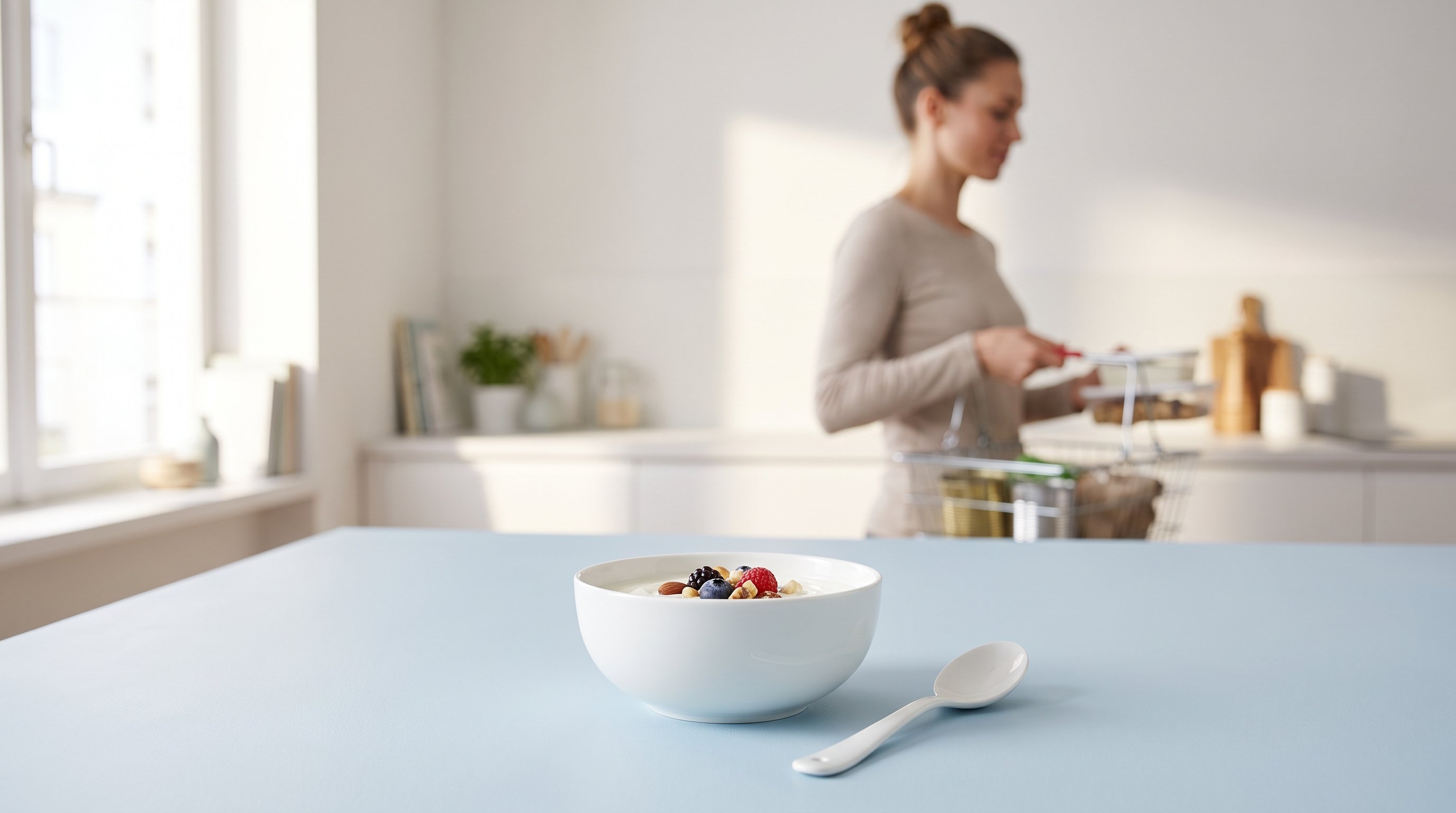
- Mid-morning - a small pot of cottage cheese with a handful of berries, roughly 15 grams of protein.
- Afternoon slump - two hard-boiled eggs with a pinch of salt, roughly 12 grams of protein.
- Evening, before or after a walk - a handful of roasted edamame or a small portion of plain Greek yoghurt, roughly 10-15 grams of protein.
Making Snack Choices Work Around a Busy Week
The snacks that survive a real week are the ones that need almost no preparation, because decision fatigue by 3pm is real and a complicated snack loses to the vending machine every time.
Batch-boiling eggs on a Sunday, buying single-serve yoghurt pots instead of a tub you have to portion yourself, and keeping a bag of nuts at your desk all remove the moment where you'd otherwise grab whatever's nearest.
A meal plan built around food you already like makes this easier still, because the snack suggestions match what's already in your fridge instead of asking you to buy five new ingredients just to hit a protein number. High.diet's meal planning works the same way for snacks as it does for main meals, so the between-meal gaps aren't left to guesswork.
When Better Snacking Starts to Feel Automatic
The first week or two usually means actively thinking about what to grab, which feels like extra effort compared to just reaching for whatever's closest.
Most people find that the planning drops off once two or three go-to snacks become the default, at which point it's less of a decision and more of a habit sitting in the fridge.
There's no fixed point where this clicks for everyone, so it's worth judging progress by whether the 3pm slump feels smaller, not by a calendar date.
Mistakes That Quietly Undo a Snacking Routine
Treating a Protein Bar As a Free Pass
Some bars carry as much sugar as a dessert alongside the protein, so check the label rather than trusting the front-of-pack claim.
Snacking on Top of Full Meals Instead of Instead of Them
A snack is meant to bridge a gap, not stack on top of three full meals, or the daily total creeps up without you noticing.

Picking Snacks You Don't Actually Enjoy
Forcing down plain chicken breast between meals rarely lasts, so find a protein source that's actually satisfying or the habit won't survive a bad week.
Skipping Snacks Entirely and Arriving at Dinner Starving
Going too long without eating usually backfires into overeating at the next meal, which defeats the purpose of snacking well in the first place.
Letting High.diet Shape Your Snack List for You
Working out protein grams per snack, matching them to what you actually like, and keeping the total honest across a full day is a lot of small arithmetic to do by hand every single day.
High.diet's tailored meal plan builds snack suggestions around food you already eat, so the protein target is handled in the background instead of needing a calculator at 3pm.
Progress tracking for water, steps and weight sits in the same place, so a better snack choice isn't an isolated win, it's one piece of a day you can see adding up.
Build Your Protein Diet
Protein Focused Eating
Picking One Snack to Swap This Week
Better snacking doesn't need an overhaul, it needs one swap: pick a single low-protein snack you reach for most days and replace it with something that clears 10 grams of protein.
Keep it simple enough that you'd actually eat it on a bad day, not just a good one. High.diet can take the guesswork out of the rest of the plan while that one habit settles in.
FAQ
Aim for roughly 10-15 grams per snack, which is enough to slow digestion and curb hunger without turning the snack into a second meal.
Only if the snack is stacked on top of meals that haven't changed; swapping a low-protein snack for a high-protein one usually keeps the total similar while improving fullness.
Grab-and-go options like a single-serve yoghurt pot, a boiled egg made the night before, or a small bag of nuts need no real preparation at all.
Rotating two or three options rather than relying on just one keeps it from feeling repetitive, and High.diet's meal plan rotates suggestions so the list doesn't go stale.
Share this post