Best Protein Sources: Choosing the Right Foods You Will Actually Eat
By:Author:High.diet Editorial
Updated on:October 19, 2026

- Does the Type of Protein Source Really Matter?
- Lean Meat Versus Plant Protein: Weighing the Choice
- Why Boring Protein Choices Beat the Fancy Ones
- Matching Protein Sources to Your Actual Situation
- Building a Protein Rotation Around a Real Week
- No, There's No Protein Source That Burns Fat for You
- Letting High.diet Sort Your Protein Choices for You
- Picking Tomorrow's Protein Without Overthinking It
The best protein source is whichever one you'll actually buy, cook and eat again next week. Chicken breast, eggs, tinned beans, Greek yoghurt and tofu all do the job - the differences between them matter far less than whether they fit your routine.
Protein needs are simple arithmetic: pick a daily target, then spread it across foods you don't mind repeating. The food itself doesn't have a special metabolic trick - it just needs to be rich in protein and easy enough that you keep choosing it over the lower-protein option sitting next to it.
This guide walks through how protein sources actually compare, which ones suit different budgets and kitchens, and how to build a short list you won't abandon by Thursday.
Does the Type of Protein Source Really Matter?
Protein is protein in the sense that your body breaks it all down into amino acids - but the sources differ in how much protein they pack per calorie and per pound in your trolley.
A chicken breast gives you roughly 30g of protein for about 165 calories. Tinned lentils give you around 9g of protein for 100g, so you'd need about three times the weight to match that chicken breast - more volume, more fibre, fewer calories per gram of protein.
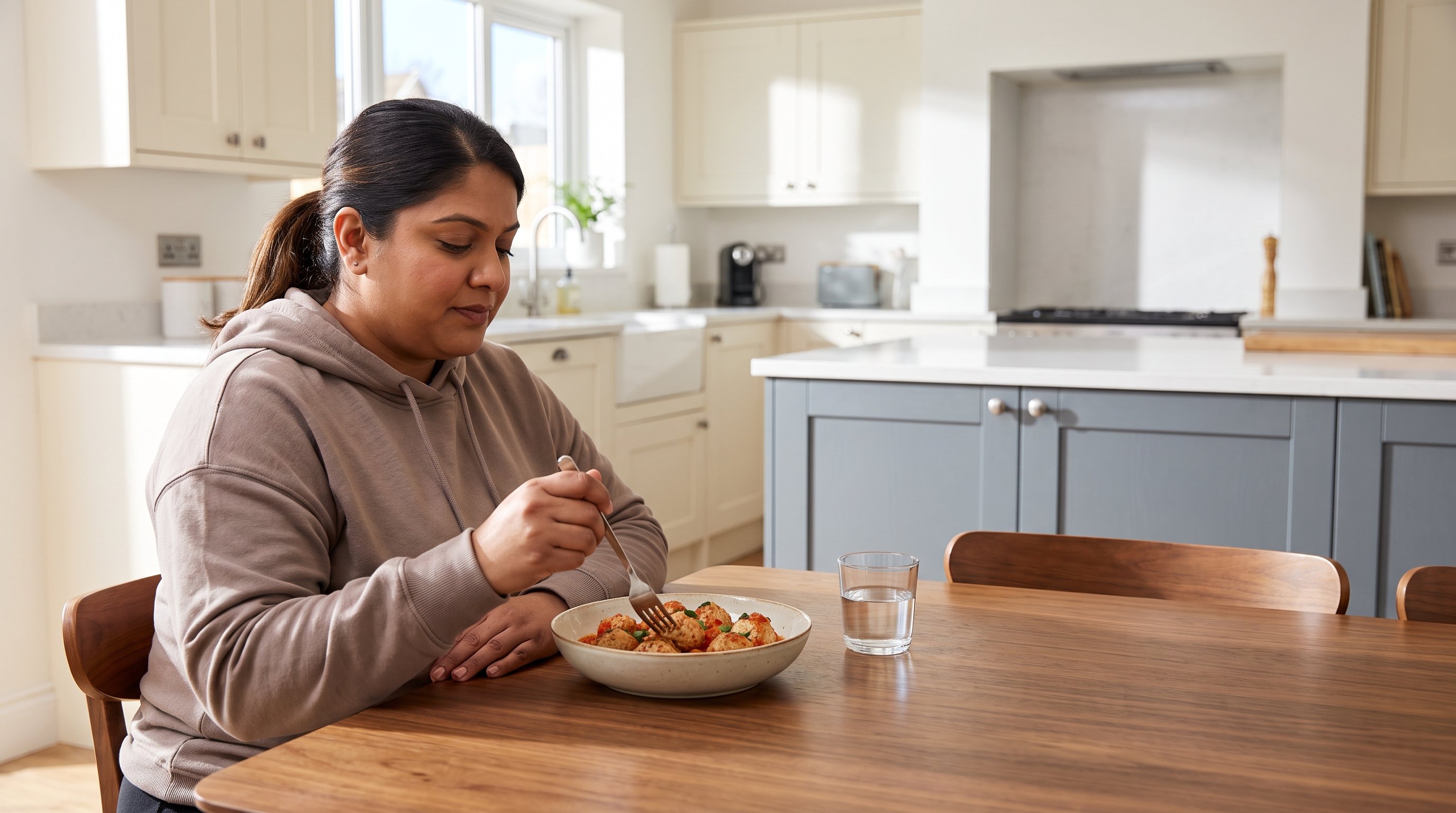
Neither is better in an absolute sense. One fills you up with fewer calories per bite, the other delivers protein densely in a smaller portion - the right call depends on what you're trying to fit into your day.
The Arithmetic That Actually Matters
If your target is 100g of protein a day, that might mean two eggs at breakfast (12g), a tin of tuna at lunch (25g), a chicken breast at dinner (30g) and a tub of Greek yoghurt somewhere in between (17g) - already 84g before you've counted anything else.
Swap any of those for a food you actually enjoy with a similar protein count, and the total stays the same - that's the whole point of having a list of interchangeable options rather than one rigid meal plan.
Lean Meat Versus Plant Protein: Weighing the Choice
Most people land on one of two camps: meat and fish as the backbone of their protein intake, or beans, lentils and tofu doing the heavy lifting.
Here's how five common sources stack up side by side, using standard reference amounts so you can compare what actually lands on the plate.
| Food | Protein | Notes |
|---|---|---|
| Chicken breast (100g) | ~31g | Low fat, neutral flavour |
| Eggs (two large) | ~12g | Cheap, quick to cook |
| Greek yoghurt (170g) | ~17g | No cooking needed |
| Lentils, cooked (100g) | ~9g | High fibre, plant-based |
| Tofu, firm (100g) | ~8g | Absorbs sauce flavours |
Meat and fish tend to win on protein density - more grams per calorie and per bite. Plant sources tend to win on cost, shelf life and fibre, which helps with fullness even if you need a bigger portion to hit the same protein number.
Why Boring Protein Choices Beat the Fancy Ones
The harder alternative is chasing novelty - a different exotic protein source every week, elaborate recipes, specialty ingredients that sit half-used in the fridge.
The easier route is a short rotation: five or six protein foods you genuinely like, bought on repeat, cooked the same simple way each time.
Adherence beats optimisation here. A slightly less 'ideal' protein source you eat every day for months outperforms the perfect one you buy once and never repeat, because the second one does nothing for your actual weekly total.
This is why so many people default to eggs, tinned fish, rotisserie chicken and yoghurt - not because they're superior on paper, but because they ask nothing of you beyond opening a packet or a tin.
Matching Protein Sources to Your Actual Situation
If You're Cooking for One
Single portions of meat go off fast, so lean on tinned fish, eggs and frozen chicken pieces you can cook in the amount you actually need.
If You're Short on Time
No-cook options like Greek yoghurt, cottage cheese, tinned beans and pre-cooked chicken strips remove the biggest barrier - the cooking step itself.
If You're Eating Plant-Based
Lentils, chickpeas, tofu and tempeh need bigger portions to match meat gram for gram, but combining a few of them across the day closes the gap easily.
If Money Is Tight
Eggs, tinned fish, dried or tinned beans and frozen chicken thighs are usually the cheapest protein per gram you'll find in a standard supermarket.
Building a Protein Rotation Around a Real Week
A rotation works better than a single meal plan because real weeks don't repeat themselves - some days you're home and cooking, some days you're eating at your desk or in the car.
Pick three or four protein sources that need zero prep, like boiled eggs, yoghurt or tinned tuna, and two or three that need a bit more effort, like grilled chicken or a bean chilli made in batches.
This is where a meal plan built around food you already like earns its keep - High.diet maps out which protein source goes where across your week, so you're not reinventing the list every Sunday night.
Keeping steps, water and protein in one place also makes it obvious on a glance whether you're actually hitting your number or just assuming you are.
No, There's No Protein Source That Burns Fat for You
Chicken breast doesn't torch fat and cottage cheese doesn't sculpt anything - no food works that way, and nothing here suggests you can eat your way to a specific body shape.
What protein actually does is help you feel fuller on fewer calories and support the muscle you're already working to keep or build - that's a real mechanism, not a shortcut.
The honest version: the right protein sources make it easier to hold a calorie deficit without feeling like you're starving, and that consistency is what moves the number on the scale over time, not any single ingredient.
Letting High.diet Sort Your Protein Choices for You
Deciding what counts as a good protein source is one thing - fitting it into breakfast, lunch and dinner without repeating yourself into boredom is the harder part.
High.diet builds a tailored high-protein meal plan around foods you already eat, so the decision of 'what's my protein today' gets made for you instead of debated at 6pm with an empty fridge.
Pair that with the light exercise sessions and the progress trackers for weight, water and steps, and the whole picture - not just the protein column - stays visible in one place.
The nutrition guides inside the app go deeper on specific foods too, if you want to understand the why behind a swap rather than just follow the plan.

Build Your Protein Diet
Protein Focused Eating
Picking Tomorrow's Protein Without Overthinking It
You don't need a perfect list of superfoods - you need four or five protein sources you'll actually buy again, and a rough sense of how much of each you need to hit your number.
Start small: swap one lower-protein meal tomorrow for one of the options on the table above, and notice how little effort that actually took.
High.diet can take that one swap and turn it into a full week of meals built the same way, so the decision only has to happen once.
FAQ
There isn't one - chicken, eggs, fish, yoghurt, beans and tofu all deliver protein well, and the best choice is the one you'll actually eat again this week. Pick two or three and rotate them.
No - lentils, chickpeas, tofu, tempeh and dairy can cover your protein target, though you'll often need slightly larger portions than you would with meat or fish. Combining a few plant sources across the day closes that gap easily.
Lean on no-cook options like Greek yoghurt, cottage cheese, tinned tuna and tinned beans, which need nothing beyond opening a lid. Batch-cooking chicken or a bean stew once and portioning it out also removes the daily decision.
Rough tracking is enough - most people underestimate without writing anything down at all. High.diet's tailored meal plan and trackers keep a running picture of your day so you're not guessing by dinner time.
Share this post